
Focus keyword: Google Local Services Ads
Meta title: Google Local Services Ads: 2026 Guide to Cost, Setup, and Migration
Meta description: Learn how Google Local Services Ads work, what they cost, who qualifies, and how to prepare for the 2026 move into Google Ads.
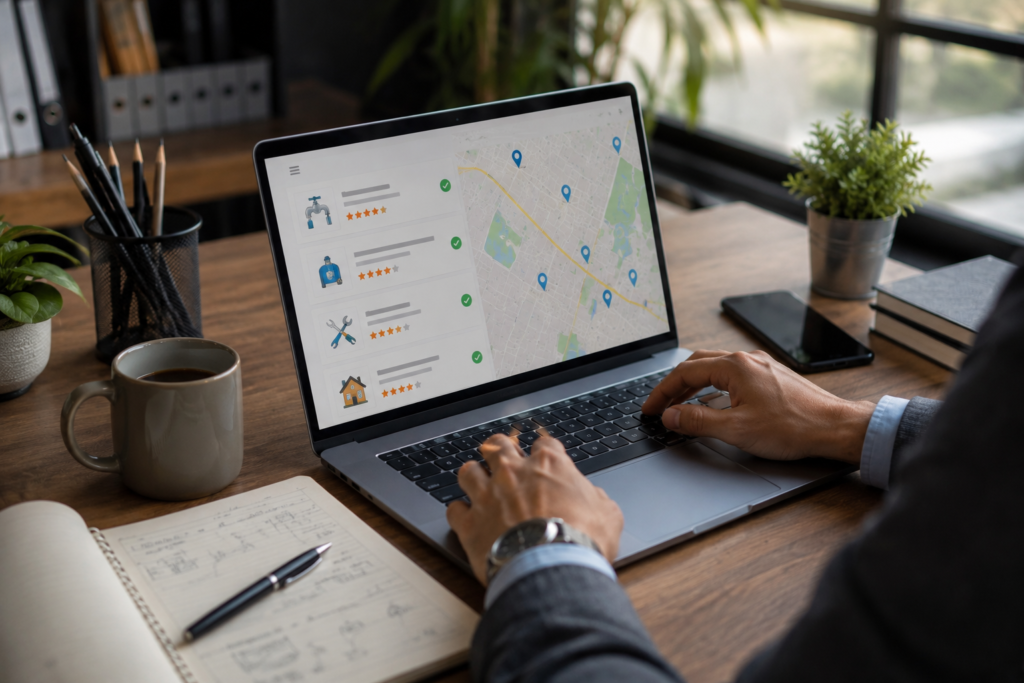
Google Local Services Ads put your business above other results on Google Search and Google Maps. Customers tap your ad and call, message, or request an appointment. Google charges you for each valid lead.
Do you want a clear view of cost, setup, and results in 2026? Read on, because Google is moving the whole program into Google Ads.
What Should You Know First?
- LSAs charge per valid lead, and clicks cost you nothing.
- The average US home-services lead cost $53 in a February 2026 benchmark.
- Google migrates campaigns into Performance Max pay-per-lead campaigns from August 2026.
- Historical LSA reports vanish after migration, so you must export them first.
- Fast answers and strong reviews lift your rank.
What Are Google Local Services Ads?
Google Local Services Ads are pay-per-lead ads for local service businesses. Google places them above paid Search ads and organic results, and you pay when a customer calls, messages, or books. Plumbers, electricians, locksmiths, lawyers, and cleaners all use them. enrichlabs
You choose service categories and service areas. Google matches your business to each customer’s search intent. Google skips keyword bids and writes the ad from your Google Business Profile.
A website is optional. The Local Services app and your profile handle calls and messages.
Google also protects your budget. Google reassesses lead quality after the charge and issues credits automatically in the US and Canada. Which of your current ad channels offers that safety net? enrichlabs
How Do Local Services Ads Work?
Google reads each search and finds verified advertisers in that service area. Your ad appears when your category, location, hours, and reputation fit the search. Here is the flow:
- A customer searches for a service, such as “emergency plumber near me.”
- Google ranks verified local advertisers at the top of the page.
- The customer calls, messages, or requests an appointment.
- Google charges you for the valid lead.
You control four inputs: your profile, budget, response time, and reviews. Which one is weakest in your business today?
Are Local Service Ads Still a Thing in 2026?
Yes. Google expands the program and folds it into Google Ads. Existing campaigns migrate automatically to a specialized Performance Max campaign type built for pay-per-lead goals. Campaigns stay keywordless and appear on Search and Maps only. googlesearchenginejournal
Ginny Marvin, Google’s Ads Product Liaison, confirmed the change publicly. The rollout runs in three phases: ppc
- August 2026: The first phase covers select US home and storefront advertisers in plumbing, HVAC, electrical, appliance repair, house cleaning, lawn care, roofing, pest control, and moving. google
- Late 2026: The second phase adds service-area businesses without storefronts and accounts with custom bidding or booking setups. ppc
- 2027: Non-US accounts and all remaining categories follow. ppc
What Stays the Same After Migration?
The pay-per-lead model, Search and Maps placement, keywordless service-category targeting, and the Google Verified badge all remain. Your customers see the same ad in the same spot. relevantaudience
What Changes After Migration?
Several controls change. Review each one before your date arrives.
- The separate LSA dashboard disappears, and you manage campaigns and leads inside Google Ads. searchenginejournal
- Historical performance reports vanish, so you must export your data before your migration date. relevantaudience
- Weekly budgets convert to daily or monthly budgets, and Google deprecates manual max-cost-per-lead bids. good2bsocial
- Better Business Bureau callouts end, so you need at least six other structured callouts, such as business hours or accepted payment methods. google
- Google reviews each migrated campaign within 24 to 48 hours, and the campaign may pause briefly. google
Google emails the account administrator 14 days before the migration date and sends one reminder seven days later. Who reads that inbox at your company? Name a person today. dev
How Should You Prepare for Migration?
Use this checklist:
- Assign one owner to watch the administrator inbox.
- Export lead history, cost data, and performance reports from the LSA dashboard.
- Record your baseline cost per lead, book rate, and cost per paying customer. A written baseline lets you compare results after migration instead of guessing. dev
- Model your daily budget against last quarter’s demand. The new daily cap may default to your weekly budget divided by seven, which ignores demand spikes. dev
- Add six or more structured callouts to replace BBB callouts.
- Update your Google Business Profile, because core business details sync from it.
How Much Do Local Service Ads Cost?
Cost depends on your category, city, and competition. Job value and review strength also shift the price. Benchmarks give you a starting point.
SearchLight, a home services data firm, studied $6.72 million in LSA spend across 888 contractors, 1,774 campaigns, and 126,650 leads in February 2026, and tracked $52.7 million in closed revenue. The dataset covers US home services. Google did not publish it. dev
The table below shows SearchLight’s blended figures for each channel. dev
| Metric | Local Services Ads | Google Ads (PMax) | Google Ads (non-branded) | Google Ads (blended) |
| Cost per lead | $53 | $72 | $149 | $104 |
| Book rate | 43.9% | 32.2% | 37.6% | 41.7% |
| Cost per paying customer | $233 | $447 | $804 | $472 |
LSA leads cost $19 less than Performance Max leads. They cost $96 less than non-branded Google Ads leads. A paying LSA customer costs roughly half the blended Google Ads figure. The average LSA ticket reached $1,826 in the same dataset. dev
Do your own numbers beat the benchmark? Compare them honestly.
How Do You Use a Local Services Ads Calculator?
Use two simple formulas:
- Paying customers = monthly budget ÷ cost per paying customer
- Revenue = paying customers × average job value
Take a $1,000 budget. Divide it by $233 to get about 4.3 paying customers. Multiply by $1,826 to reach roughly $7,800 in revenue. Each $1 of spend returns about $7.80 in revenue at benchmark averages.
Revenue is not profit. Subtract labor, parts, and overhead to find your margin. Can your team handle 4 to 5 extra jobs per $1,000? Confirm your capacity before you raise the budget.
How Do You Dispute a Bad Lead?
Open the lead in your account and select a dispute reason. Add clear details. Typical reasons include wrong-service requests, spam calls, and callers outside your area. Google reviews the lead and issues a credit when it agrees.
What Is the Difference Between Google Ads and Local Services Ads?
Google Ads charges per click and targets keywords. LSAs charge per valid lead and target service categories and locations.
| Feature | Google Ads (Search/PPC) | Local Services Ads |
| Charge model | Pay per click | Pay per lead |
| Targeting | Keywords, demographics, interests | Service categories and locations |
| Ad content | Custom headlines and descriptions | Standard format from your profile |
| Trust badge | None built in | Google Verified |
| Website | Generally required | Optional |
| Placement | Search, Display, and more | Search and Maps |
| Best fit | Wide reach and custom messages | High-intent local calls |
Which option fits your goal? Choose LSAs for nearby customers who need help now. Choose Google Ads for wider reach and website traffic. Many local businesses run both.
How Do LSAs Relate to Google Business Profile and Local SEO?
Your Google Business Profile powers your LSA details. Business Profile and local landing pages stay the organic foundation next to paid lead campaigns. Strong organic signals support your paid results. Multi-location brands gain the most from aligned data. seo-day
Which Businesses Qualify? Local Services Ads Categories
Google offers LSAs in selected trades and professions. Availability varies by country and city. The first migration wave names nine home and storefront trades. Google also offers categories such as locksmiths, garage door services, carpet cleaning, legal services, real estate, and financial planning in select regions. google
Check eligibility in Google’s sign-up flow. Enter your business type and service area. Google shows whether your category runs in your region.
How Do You Sign Up for Google Local Services Ads?
Sign-up takes days to weeks. Verification sets the pace. Follow these steps:
- Check eligibility. Confirm that Google offers your category in your region.
- Link your Google Business Profile. Add accurate hours, photos, and contact details.
- Choose job types and service areas. Select the ZIP codes or cities you can reach.
- Submit documents. Upload state or local licenses, proof of insurance, and background check consent for the business and field staff.
- Set your budget. Pick a limit that matches your target lead volume.
- Activate your ad. Answer each lead fast to protect your rank.
Which document slows most applicants? Licenses and background checks. Gather them first. Google may adjust the sign-up flow as the migration rolls out, so check Google’s Help Center for current steps.
What Is the Google Verified Badge?
Trust badges raise response rates. Older guides call the badge Google Guarantee or Google Screened. Google confirms that the Google Verified badge remains after migration. relevantaudience
Google grants the badge after checks on your license, insurance, and background. Customers see the badge next to your name and feel safer when they choose you. Would you call a plumber without a badge over one with a badge?
How Do You Log In to the Local Services Ads Dashboard?
Migrated accounts sign in to Google Ads. The separate LSA dashboard is unavailable after migration. Accounts outside the early phases use the current dashboard until Google sends a migration notice. searchenginejournal
Sign in with the Google account linked to your Business Profile. Download your history before your date. Export leads, cost data, and reports. What trends will you want to compare next year? Save them now.
What Factors Decide Your Local Services Ads Rank?
Google ranks advertisers by relevance and quality. Key signals include:
- Proximity: Closer businesses rank higher for a searcher’s location.
- Review score and count: Strong, recent reviews raise your position.
- Response speed: Fast answers to calls and messages lift your rank.
- Business hours: Longer availability earns more impressions.
- Verification status: Badge holders gain trust and visibility.
- Budget: A higher cap keeps your ad live all month.
- Complaint and dispute history: Fewer complaints protect your position.
LSAs book 43.9% of leads in the benchmark. Each answered call therefore carries real revenue potential. Who answers your phone at 7 p.m.? dev
How Can You Lower Cost Per Lead and Improve Lead Quality?
Small changes create large gains. Start with the basics.
- Answer every call. Missed calls waste paid leads. Set up call forwarding and mobile alerts.
- Collect reviews weekly. Ask customers right after each job. Send a direct review link.
- Complete your profile. Add photos, service areas, and hours. Fill every field.
- Match hours to demand. Open when customers search. Nights and weekends often bring urgent jobs.
- Pick precise categories. Select only the jobs you want to win.
- Mark lead outcomes. Label each lead as booked or lost. Google learns from your feedback.
- Dispute invalid leads. Claim credits for spam and wrong-service requests.
- Track cost per paying customer. Cost per lead alone hides weak close rates.
What is your current call answer rate? Measure it this week. Many owners find quick wins there.
What Mistakes Cost You the Most?
Most LSA problems start with setup errors. Watch for five:
- Wrong service categories
- Budgets too low to stay live all month
- Unanswered after-hours leads
- Missed data exports before migration
- Outdated profile details
Fix each item once, and your cost per lead often drops.
What Do Key Local Services Ads Terms Mean?
- Lead: A valid call, message, or appointment request from a customer.
- Book rate: The share of leads that schedule a job.
- Cost per paying customer: Total spend divided by customers who pay you.
- Keywordless: Google matches ads by service category, and you choose no keywords.
- Performance Max (pay-per-lead): The Google Ads campaign type that replaces the LSA dashboard.
- Service area: The ZIP codes or cities where you accept jobs.
- Google Business Profile: The free profile that supplies your name, address, hours, and reviews.
Frequently Asked Questions
What are local service ads?
Local service ads are pay-per-lead Google ads for local businesses. They appear at the top of Search and Maps. Customers contact you by phone, message, or appointment request.
How much do local service ads cost?
The US home-services average sits near $53 per lead, based on a February 2026 benchmark. Your price varies by trade, city, and competition.
What is the difference between Google Ads and local service ads?
Google Ads charges per click and targets keywords. LSAs charge per valid lead and target service categories. LSAs also carry a Google trust badge.
Are local service ads still a thing?
Yes. Google migrates LSAs into Performance Max campaigns with pay-per-lead goals, starting August 2026 for select US advertisers.
Do you need a website for LSAs?
A website is optional. Your Google Business Profile supplies the core details.
Can you choose keywords for LSAs?
Google matches ads by service category and location. Keyword bids play no role.
Where do you find the Local Services Ads login after migration?
Sign in to Google Ads. Migrated campaigns and leads live there.
Can you get a refund for bad leads?
Yes, in many cases. Dispute the lead, and Google reviews it for a credit.
What Should You Do Next?
LSAs deliver high-intent leads at a competitive cost. The 2026 move into Google Ads changes management, budgets, and reports. Your placement and pay-per-lead model stay the same.
Conclusion
Google Local Services Ads can help eligible local businesses connect with customers who are actively searching for nearby services. By maintaining accurate business information, clearly presenting available services, responding promptly to leads, and following Google’s advertising and eligibility requirements, businesses can build a stronger local advertising presence. As part of a broader digital marketing strategy, Local Services Ads can complement SEO, Google Business Profile optimization, and other local marketing efforts.
Xkolab appears to be associated with creator collaboration, influencer marketing, and digital campaign services, helping brands connect with creators and develop marketing collaborations. However, I couldn’t reliably access the exact xkolab.com website, so this is based on the available search evidence rather than a direct review of the site.